

Awakening statues: desire in Call Me by Your Name
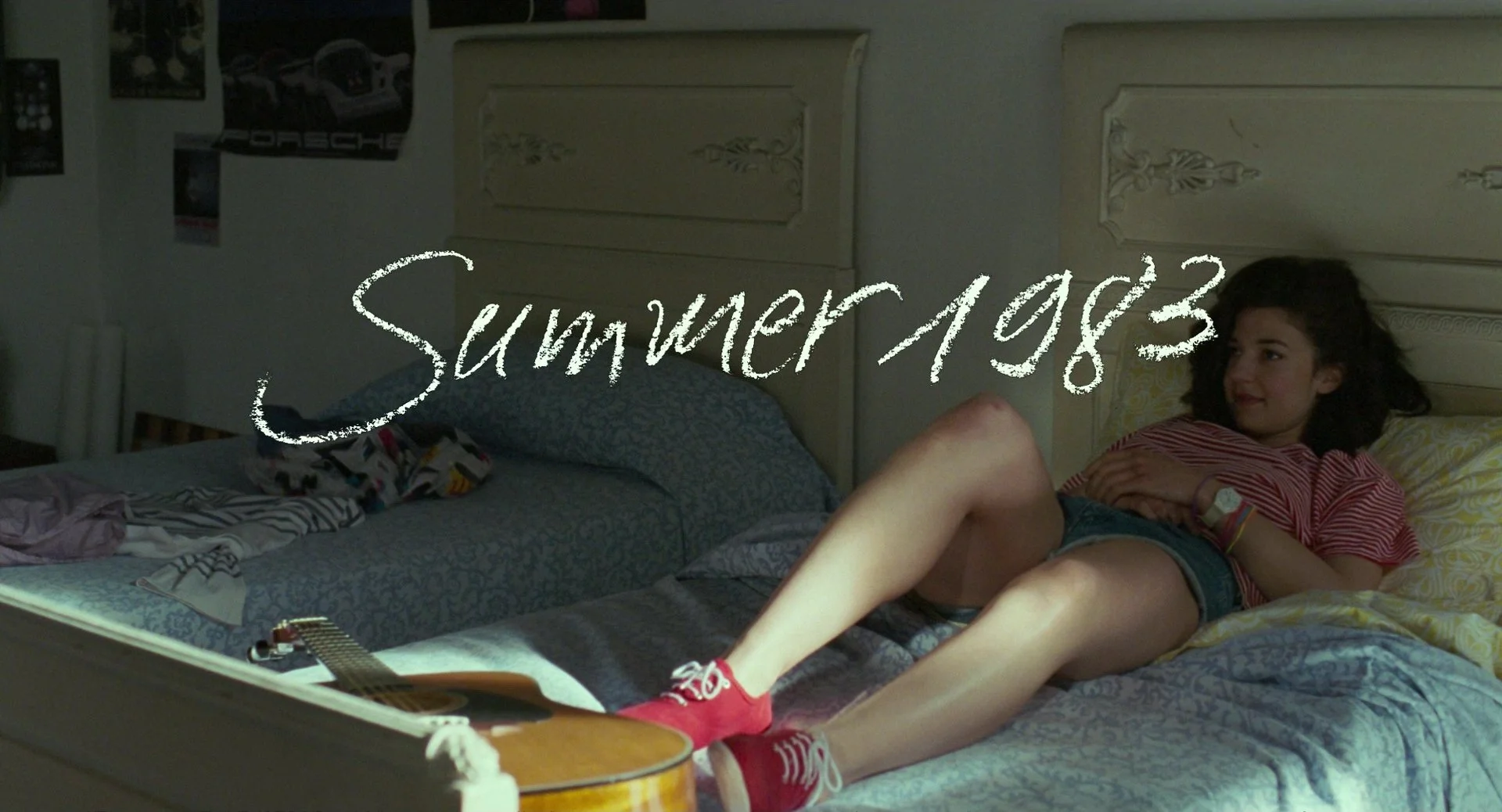
Awakening desire. This is one of the leitmotifs running through the work of Luca Guadagnino, if not the entire realm of coming-of-age cinema. The teen movie, a firmly established genre in its own right, earns its status in the depiction of burgeoning emotions, alternating between expressions of bitter humiliation, romantic joy or existential anguish or, here, as reflections in the turquoise hues of a summer by the water and the warmth of a house with shutters wide open, somewhere in northern Italy in 1983. PAR CAMILLE MATHIEU
Photographs scattered across a desk amidst playful rays of sunlight. Pictures of beautiful forms in stone, male figures with perfect contours, square jaws and motionless curls. Right from the opening credits, Call Me by Your Name unveils these images of classical sculptures, frozen in their youthful perfection. While in cinema and literature, statues occasionally embody an impossible, unrequited desire, because the flesh is as cold as marble, throughout Guadagnino's movie they appear as an object of desire. These statues are, naturally, idealized forms of beauty - and in that sense, forever unattainable - but they are more alive, more desirable, echoed in the way the director films his characters, Elio (Timothée Chalamet) and Oliver (Armie Hammer), whose muscles tense as they stretch, whose bodies relax as they laze, lying by the water, reading, sleeping. The message comes perhaps most starkly from the character’s father who, as he views his slides of antique statues, makes this strange remark: "As if they're daring you to desire them." And this ambiguous "you" seems to be addressed to both the characters and the audience.
The theme of beauty is too evident to need stressing. And yet it fascinates us, just as it has fascinated humanity over the centuries. The two actors are obviously beautiful, but this beauty is neither coquettish nor vain. On the contrary, it is powerfully thematic and sustains the metaphor of statues, which recurs like a wave throughout the film. This blatant beauty is also part of an eroticization of the masculine form that is to be lauded in present-day cinema. In an industry that has outrageously eroticized the female body, sometimes grotesquely so, this eroticization of the male form is a gift in itself. First, because it gives us the hope of a paradigm shift in character depiction, and also because it offers a real projection of desire for the male body, unconcerned about whether it is homosexual or heterosexual, and invites us to contemplate. Because contemplation is nascent desire, and it is precisely this subterranean and burgeoning desire that is at work in Call Me by Your Name.
Elio's beauty seizes our emotions because it is caught in the vulnerable gap between adolescence and adulthood. As the film opens, the ballet of statues gives way to the graceful figure of Timothée Chalamet. This youthfulness is not meant to be eroticized here, but to touch and move us: it is a fragile, fleeting grace. Blink and it’s gone; you’ve become a man. But Elio, still a boy, stands like a man, with a deep voice and nascent confidence. With Oliver, the dynamic is reversed. Although still a student, he is already a man: his stature, height and musculature are in many ways reminiscent of statues. Elio is also depicted as such, with an emphasis on his curly hair and smooth cheeks. But paradoxically, while Oliver's body is that of a man, his mannerisms are those of a teenager: he has the unpredictability and mood swings of youth, the brusque mannerisms of a boy, when he gulps his drinks, swallows his lunch, throws himself on the bed in his sneakers or leaves the table with an abrupt "later!” Elio and Oliver find themselves at the crossroads of these two ages.
As in teenage summers, when desire is working under the surface in muted tones, the whole movie offers a representation of these youthful emotions. This brings us back to our statues: they are everywhere, evoking the story of Pygmalion, which has haunted cinema from its very beginnings - its first adaptation by Georges Méliès dates from 1896. It was by dint of desire, caresses and prayers that the sculptor Pygmalion was able to bring his statue Galatea to life. The statues in Luca Guadagnino's movie seem to be brought to life by desire. The portrayal of this desire is developed through frequent references to Antiquity. Far from being a risky or purely aesthetic motif, these references form a logical framework that underpins the screenplay, which is otherwise so little inclined to theorize about these nascent feelings, sexual identity or carnal love.
Elsewhere, depictions of desire involve the presence of swathes of clear water in lakes and ponds. A quotation from the Greek philosopher Heraclitus, taken from one of Oliver's notebooks, speaks of the perpetual movement of water, encouraging us to embrace change as a metaphor for adolescent upheaval: "The meaning of the river flowing is not that all things are changing so that we cannot encounter them twice, but that some things stay the same only by changing." Of course, this shimmering surface, bathed in sunlight, is an overused poetic metaphor. It is heavy with innocent poetic images of frolicking young water nymphs, what the philosopher Gaston Bachelard, in L'eau et les rêves, calls "the Nausicaa complex." This living water is a symbol of freshness, purity and therefore youth. These are the waters of love, as Bachelard calls them. In Call Me by Your Name, water belongs to this reign of youth and sensuality - after all, it calls for naked skin - and sets the poetic climate.
These two symbols - water and statues - come together in the scene of the statue being pulled out of the water. It emerges like a desire that is finally being revealed to the characters and the audience. Oliver's first impulse is to touch the bronze mouth with his thumb. A highly erotic gesture, foreshadowing another. During the characters' first lovemaking scene, Oliver repeats his gesture, caressing Elio's mouth, and the virtual desire of the statues seems to be fulfilled. Ultimately, it is fruit - still used as a hedonistic symbol if the ubiquity of our peach emoji is anything to go by - that completes the depiction of this desire. The juice we drink greedily, the apricot we gather from the tree, and finally, the peach that Elio uses to masturbate. This ripe fruit, bursting with juice and ready to be picked, is, of course, the clearest metaphor for this awakening to sexuality.
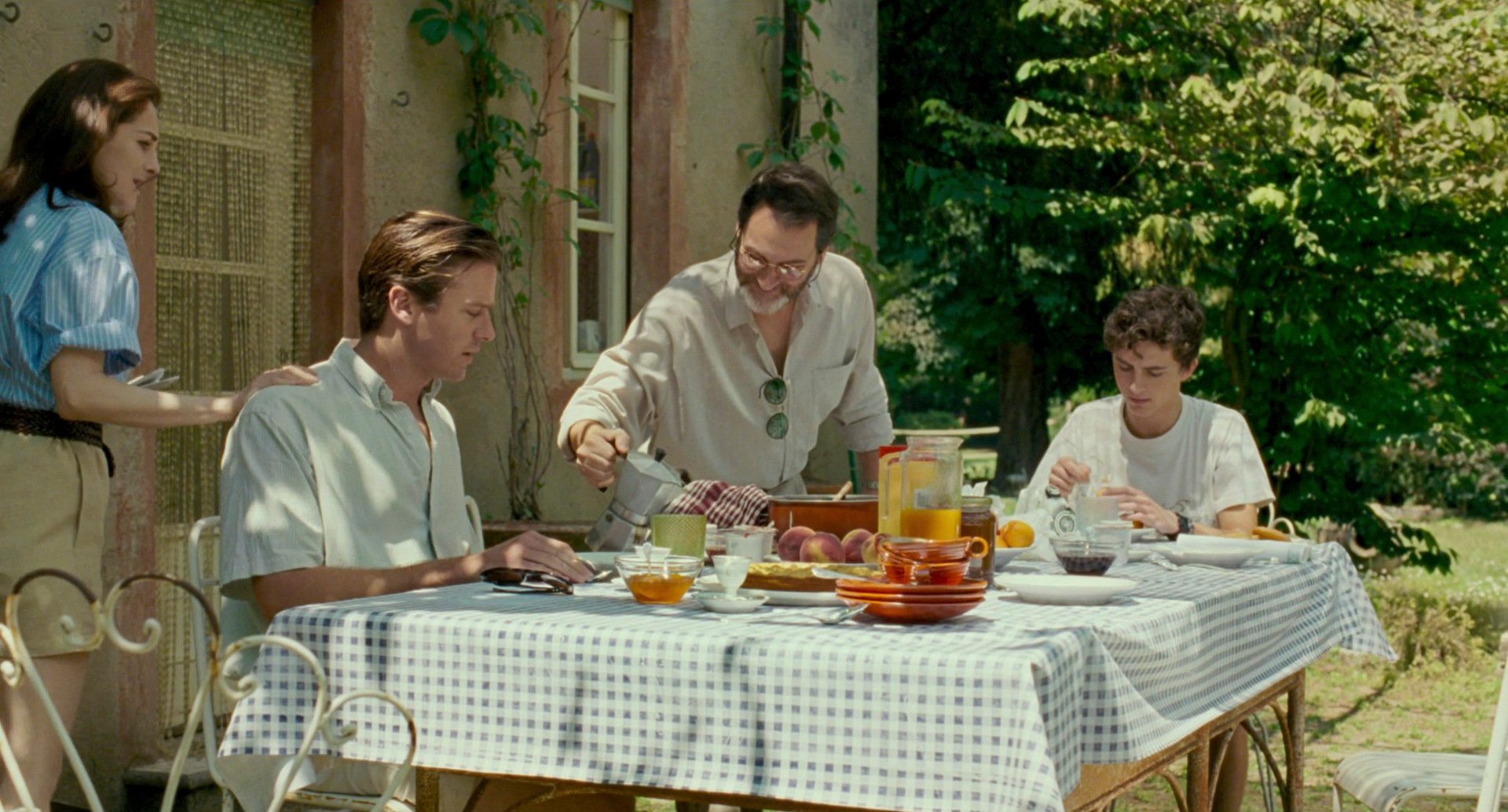
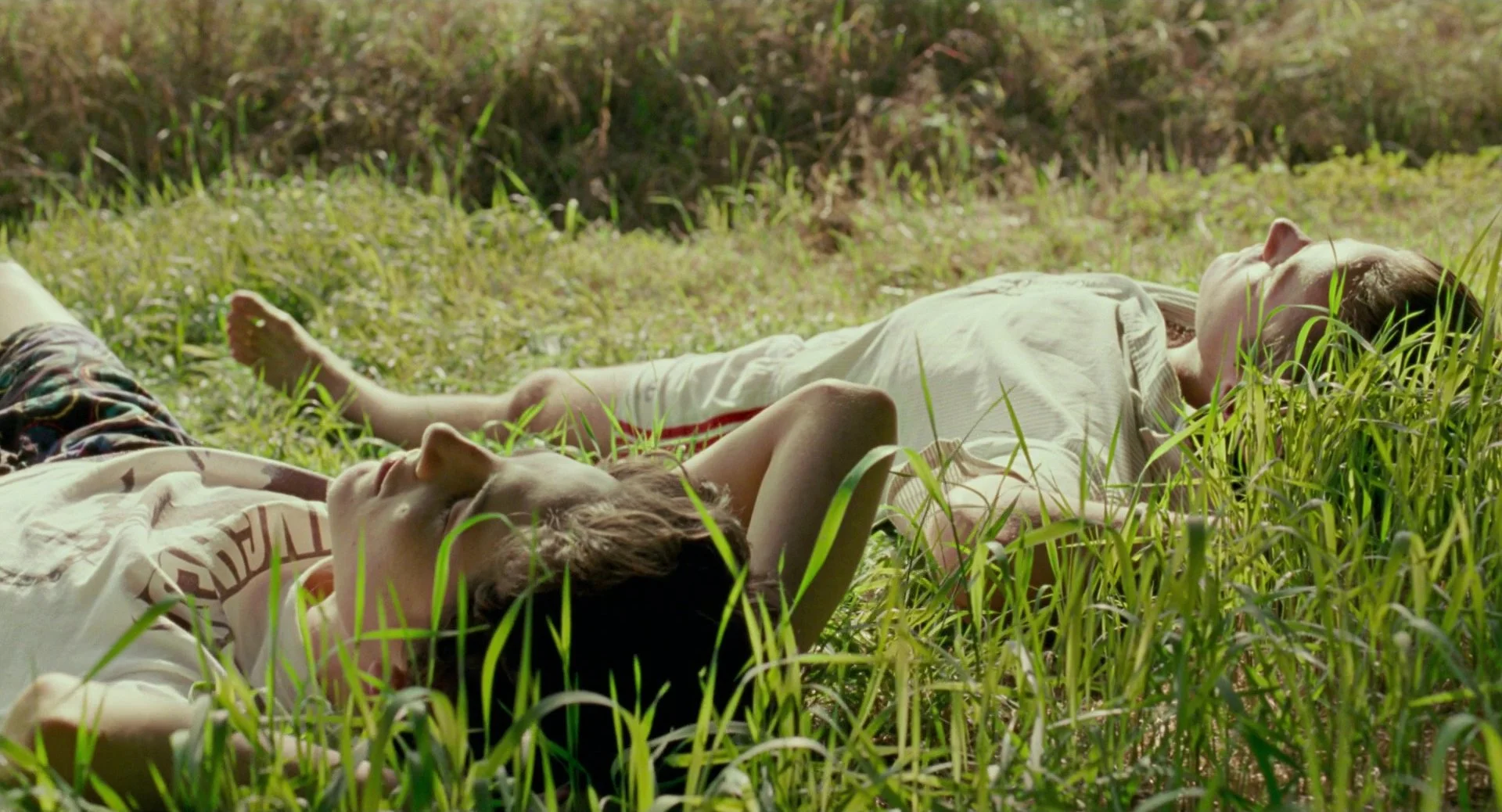
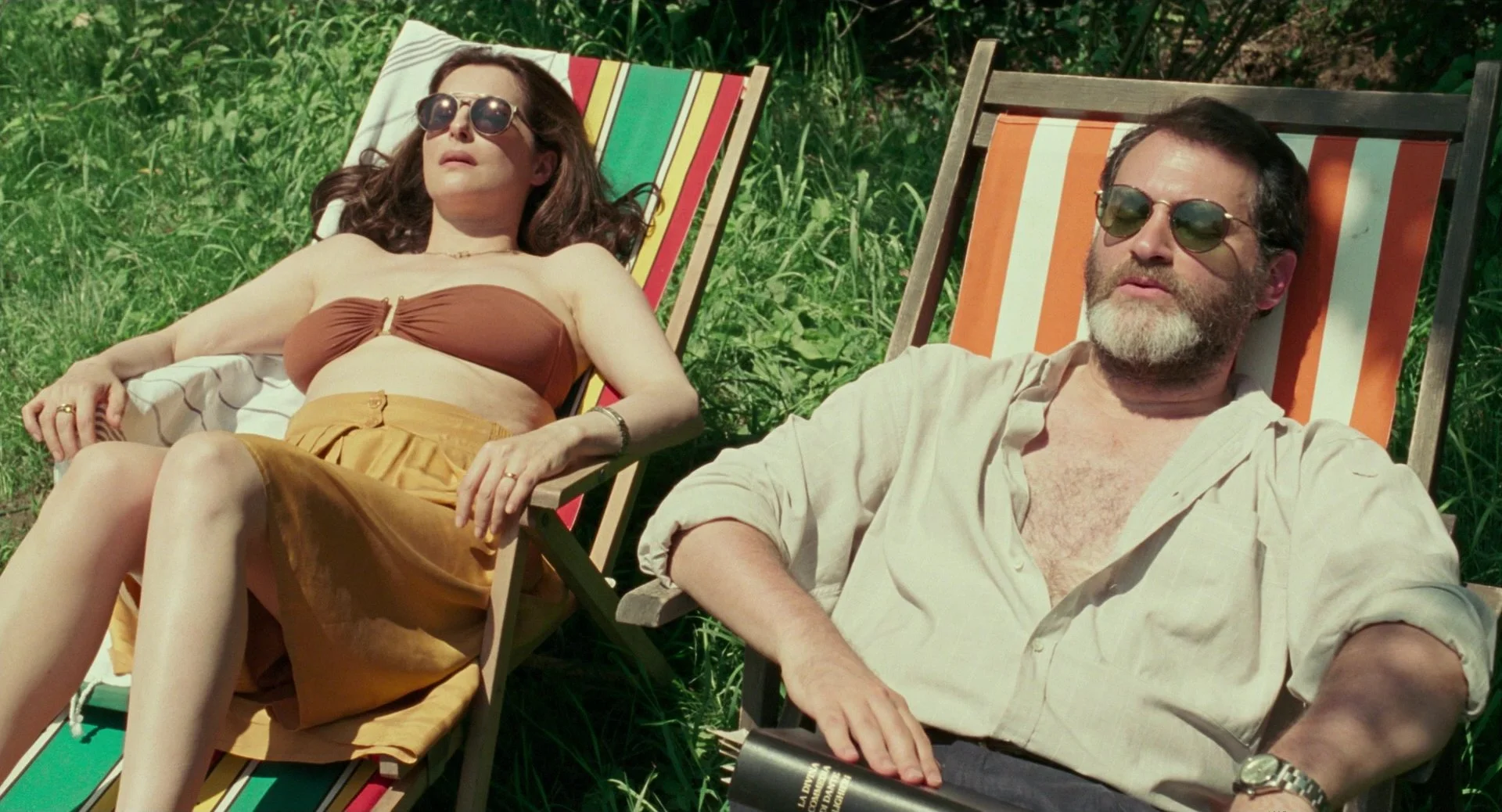
Call Me by Your Name is charged with symbols. Rather than giving an explicit depiction of the budding romance, the movie strives to portray it by every other means possible. Even the dialogue treads carefully: the father talks about the ambiguity of statues ("Not a straight body in these sculptures"), the mother quotes Elio an extract from the Heptameron by Marguerite de Navarre about a couple who dare not reveal their love ("Is it better to speak or to die?"). Both act as kindly guardians, observing safely from afar. The dialogue between Elio and Oliver is always abstruse and veiled, sketching out only the vague contours of the relationship. We smile as we watch Oliver dancing to the 1980s hit song Words, whose lyrics stress the impossibility of communication ("Words... don't come easy to me"). The first "we" is finally given utterance when, lying on the grass, Oliver repeats his gesture and caresses Elio's lips: it is the concretization of desire.
Watching this unspoken love story, we are reminded, rightly or wrongly, of the movie Charulata by Indian filmmaker Satyajit Ray, an old friend of James Ivory, the screenwriter of Call Me by Your Name. In Charulata we discover bourgeois characters, in their beautiful Victorian house, living an unacknowledged romance. No words or gestures betray this adulterous love story. Satyajit Ray uses the power of cinema to show the birth of love. His meticulously detailed technique charges every movement, every zoom, and every close-up with meaning. He scrutinizes faces to capture emotion or confusion, doubts or the sudden darkening of jealousy. His focus on these details brings the true love story into the light. The same is true of Luca Guadagnino, who develops his romance here through direction rather than dialogue, through gaze rather than action, through quotation rather than explanation. Satyajit Ray's work has a subtle yet undeniable influence. “I watch many great films but my education in Indian cinema is almost classic. But in terms of influence, if it’s there, it’s likely unconscious,” said Guadagnino in an interview with Indian newspaper The Hindu. He mentions Charulata as one of his favorite movies, “It’s one of the great portraits of female solitude and emotions. It’s beautiful.”
The theme of emerging desire preoccupied Ray's movie and seems to run through the œuvre of Luca Guadagnino. The Italian filmmaker is widely acknowledged for the intensely sensual nature of his movies, for the attention he pays to the senses, to bodily feelings: touch and taste are celebrated with even greater vigor here. In I Am Love Guadagnino laid the foundations of his aptly named Desire trilogy, which he continued with A Bigger Splash, a variation rather than a remake of Jacques Deray's La Piscine, and which concludes with Call Me by Your Name. Recently, he explored this in a more unexpected way in Bones and All, a romantic horror movie in which a pair of teenagers (Timothée Chalamet and Taylor Russell) embark on a bloody road trip. The impulses of life and death are dangerously intertwined, and the characters’ cannibalistic impulses are portrayed as eminently sensual.
As in every good teen movie, the initiation to sexuality is a decisive moment in the passage to adulthood. In Call Me by Your Name, there are two first times for Elio: starting with his classmate Marzia, like an awkward, happy child's game, and then with Oliver, with its overflowing, exhausting sensuality, which shakes them both. This journey to discover love reaches its climax in the intimate scene that gives the film its title. It is Oliver who pronounces the vow: "Call me by your name and I call you by mine". From now on, Elio and Oliver will exchange names, renaming themselves, as if to say: at this point, I no longer know where you begin and where I end. The idea of merging into the other, of no longer discerning the limits of being, is also portrayed in Bones and All with shocking violence: in the great cannibalistic love scene at the end of the film, when Timothée Chalamet's character begs the woman he loves to devour him. A fantasy of possessing and consuming the other, experienced more completely than through sexuality. Since Call Me by Your Name seems so preoccupied with the works of ancient Greece, we can see, as in the novel on which the movie is based, a reference to the myth of Aristophanes according to which Man was originally a being with two bodies that Zeus, in anger, split to punish him for an outrage. Since then, each half has desperately sought its other part, in an attempt to unite with it again, to embrace and merge once more. This idea of the search for one's other self, one's soul mate, is far from being naively depicted as a quest for true love, but is the story of sensual passion: recognizing oneself in the other, feeling one's body through the other, testing its limits, in short, being consumed by desire.
Call Me by Your Name is a film about desire in all its forms: desire that is dulled and then awakened, thwarted and then satisfied, right through to the pain of separation. It is a love story of so few words that can only be fully understood by someone looking in from outside. And here it is the father, a forbidden and lucid spectator, observing from afar the love he has never known, who gives his son the words he needs to understand what he has experienced. All the things that have been left unsaid, all the things that have remained silent, are finally expressed clearly in this fatherly discourse. On the subject of this friendship, as he modestly calls it - not out of fear of what it really means, but out of respect for what belongs to them alone - he declares, with a smile, these French words: "parce que c'était lui, parce que c'était moi" ("because it was him, because it was me"). A quotation from Michel de Montaigne in his Essays, published in 1580. In the years after the death of his dearest friend, Étienne de La Boétie, Montaigne wrote these words that resonate so truly here: “In the friendship I speak of, our souls mingle and blend with each other so completely that they efface the seam that joined them and cannot find it again. If you press me to tell why I loved him, I feel that this cannot be expressed, except by answering: Because it was him, because it was me. [...] We sought each other before we met [...], I think it was by some ordinance from heaven. We embraced each other by our names.”).
