

Kissa Fever: Do you hear the heartstring?
The quintessentially Japanese establishments known as kissa, music bars or listening cafés, have been popular in the country for over a century and, in recent years, the concept has begun to spread around the world. The kissa is an idyllic spot, a (small) bar devoted to a particular genre (jazz, for instance) and to an overriding ethos: a love for music. More than a subculture, it is a religion... BY DELPHINE VALLOIRE
Every obsession begins with a spark. The kissa, a word derived from “kissaten”, literally “tea-drinking shop”, stemming from the term ongaku kissa (“music bar”), was born in the 1920s, at a time when Japan was opening up and gradually assimilating the culture and ideas of the west. After 250 years of the Edo period (1603-1868), when the country was sealed off from the outside world, these cafés provided an outlet for the discovery of western music: first classical music attracted a growing audience, followed by jazz during an era when records and turntables were hard to come by. The Second World War changed everything: records from enemy countries were confiscated or destroyed, and the defeat of Japan heralded a dark period: Tokyo had been virtually flattened by bombing raids, and the population, mostly destitute, was hungry. Everything had to be rebuilt, and the presence of American military bases and GIs encouraged the growth of jazz kissa: soldiers brought with them their vinyl records and equipment (transistors, amplifiers, etc.) that could be bartered near the bases.
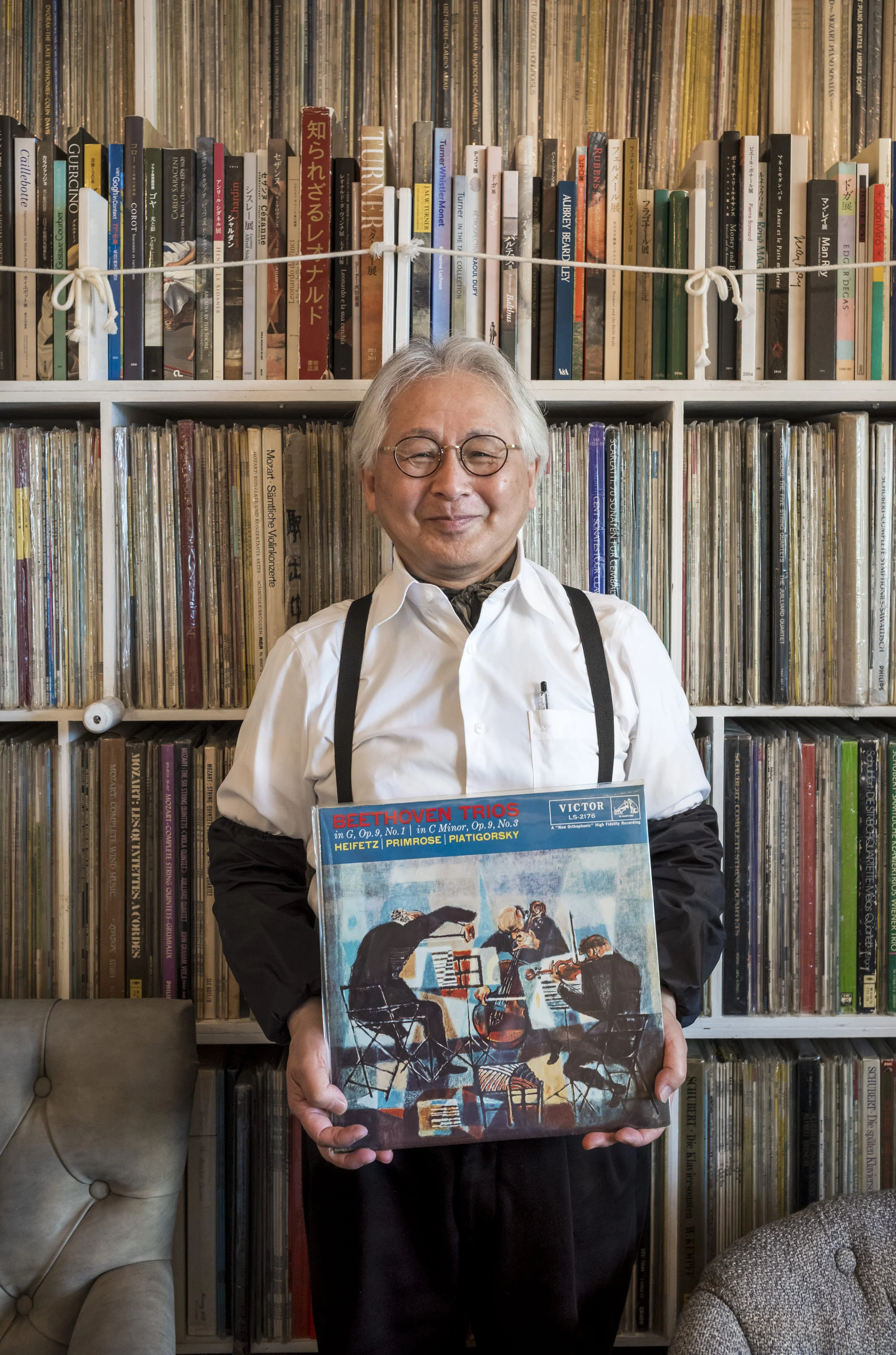
The jazz kissa was the place to indulge in the unthought-of luxury of listening to jazz, you could even run to the other end of town to get the latest Duke Ellington. In the sixties and seventies, there were over six hundred jazz kissa in Japan. At the time, they were also a rallying point for penniless students, a bohemian generation trying to make a revolution but not quite succeeding, with their well-defined ideals and tastes. These years saw the modus operandi of the kissa taking shape: the bar is run by a “master” (masutā), who owns a large record collection and is an authority in a particular musical field. Mostly, the masutā works alone: he serves drinks to his customers and carefully select the music, except for possible requests from a few privileged regulars. The lights are dimmed, no one talks, makes a call or takes photos since nothing is allowed to disturb the concentration required to listen to the music flowing from a high-quality stereo system, often lovingly tweaked over decades to achieve the perfect sound.
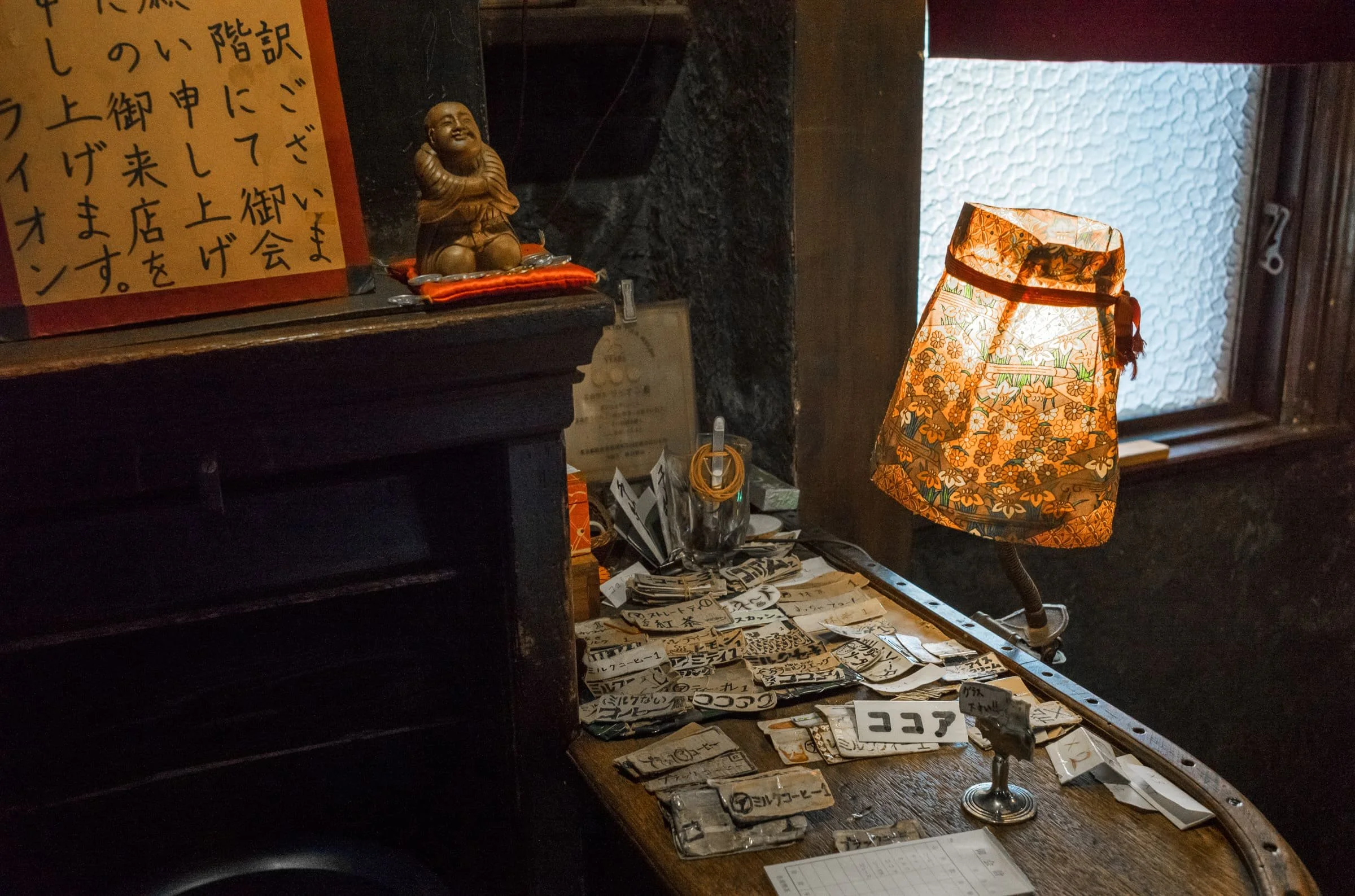
In the fascinating six-part documentary series A Century in Sound (three parts of which have been included in a documentary that is being shown at festivals around the world this year), director Nick Dwyer examines the history of the kissa, the importance of the individuals behind them, and their place in Japanese society through visits to a number of special venues and encounters with these eccentric “masters” whose personalities and passion for music radiate in these tiny, timeless spaces. A New Zealander and music fan since his teens, Nick Dwyer began working in radio at the age of fourteen before moving into television where he explored musical culture in over seventy countries for the National Geographic Channel show Making Tracks. In 2004, he began traveling regularly to Japan, fascinated by the vast scale of its musical culture that could be discovered in the microcosm of the specialized stores of Shibuya. He then decided to settle there permanently and made a documentary on the history of Japanese video game music, Diggin' In The Carts in 2014. In July 2024, in the music culture podcast Speaks Volumes by DJ Derrick Gee, Nick Dwyer explains how he became so engrossed in the world of kissa and ended up visiting and filming over a hundred venues across Japan over the last ten years. One day, without any particular expectations, he crossed the threshold of the Meikyoku Kissa Lion, a classical music café: “I stepped into a 100-year-old classical music café called Lion Café, which is just up the street from the absolute madness and chaos of Shibuya crossing. And you step in this café built originally in 1926 in the very beginnings of this culture, where classical music records are played over the most incredible sound system, and everyone sits in silence and listens. And I was just dumbfounded, awestruck. That experience blew my mind and changed my life.”
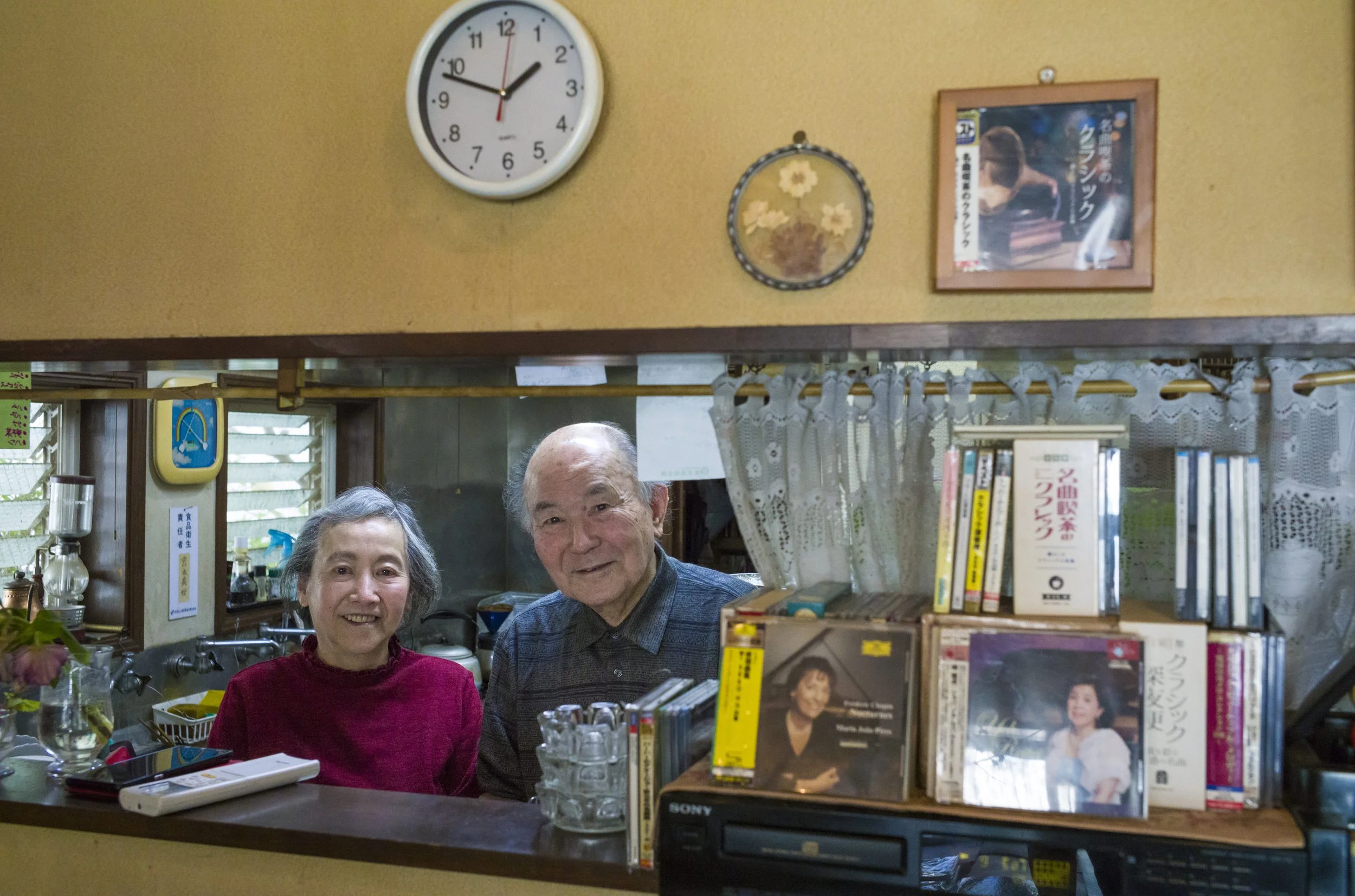
In the documentary, he films the Lion Café in meticulous detail. In a close-up, a young woman picks up a 33 rpm, carefully wipes off the dust, places it on the turntable and then announces in a whisper over the microphone: “Coming up next the composer is Mozart. Piano concerto No. 21 K 467, Walter Klein is the pianist, Gunther Kehr the conductor." Founded in 1926 by Yamadera Yanosuke, a Beethoven fanatic, then rebuilt after being burnt down in 1945, the Lion Café was managed by Muneo Ishihara and then, after his death, by his wife Keiko Ishihara, who delivers here the (musical) memories of a lifetime. Time has no hold on the Lion Cafe: the 5,000 vinyl records are perfectly arranged, a bust of Beethoven still stands in front of the speakers of the huge sound system, the 1972 DENON DP-3000 turntable has not moved, nor have the bronze-green walls, dark wood paneling and red velvet armchairs, in a space where only the rare tinkling of spoons against the porcelain of the cup could disturb the sound of the music rising up. All this just a few meters from the frenzy of the Maruyamacho district, at the top of Shibuya, Tokyo's historic red-light district, where nightclubs, sex shops and other 21st-century love hotels jostle for space.
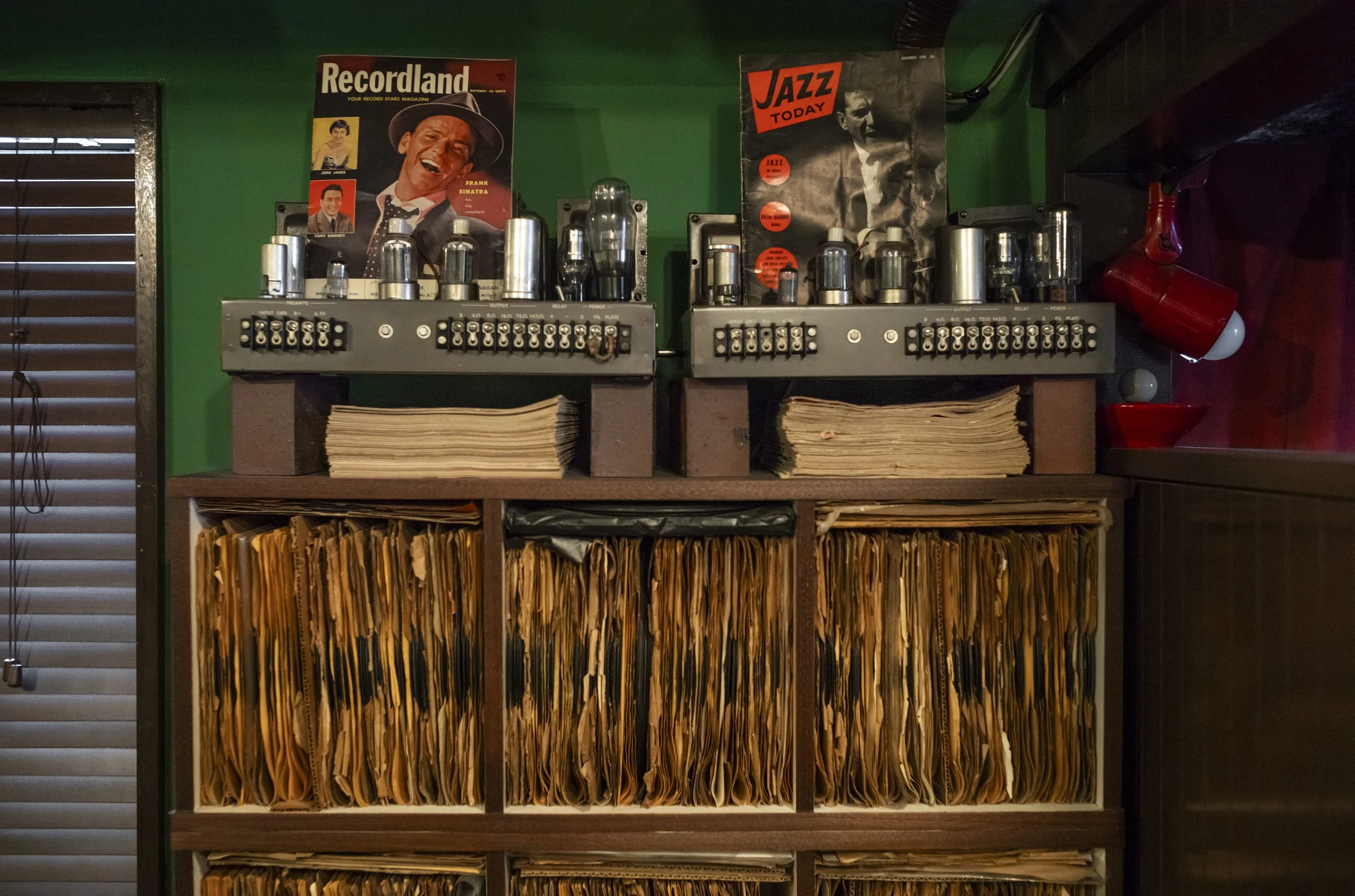
The second part of A Century in Sound explores a totally different atmosphere, that of the Eigakan Jazz Cafe, a jazz kissa just a stone's throw from Hakusan Station in Bunkyo-ku. It was founded in 1976 by two eccentrics, Yoshida Masahiro and his partner, Kinuko Watanabe, along with their cat Kotaro, who became the place's beloved mascot and sadly died a short while ago. The enormous sound system, one of the best in Tokyo, was built by Yoshida in the seventies, then fine-tuned year after year: it's the masterpiece of a lifetime. The perfect tool to showcase his immense collection of rare jazz records, in this small café full of memorabilia, with walls covered with vintage posters of Nouvelle Vague movies such as The 400 Blows or Hiroshima mon amour. Yoshida's passion for jazz has always been matched by his passion for cinema: he has been a director and his partner a screenwriter. For them, the freedom of jazz echoes the freedom of certain movies from the sixties and seventies, which broke all the rules to invent a new world. In their jazz kissa, they sometimes organize screenings followed by discussions about the movie- something that sets them apart from other kissa. Indeed, Eigakan means ‘cinema hall’ in Japanese.
Another place, another creature. In the third part, we come face to face with a strange bird: the Bird Song Café set up by Junichi Umezawa, a rock kissa that followed in the footsteps of the famous first rock kissa of the seventies, the now defunct Blackhawk. With its white plaster walls sometimes covered in tiny graffiti, immaculate bar, electric blue aquarium, the wall of albums and row of spirit bottles, the Bird Song Café holds is home to a vast panorama of rock music, both avant-garde and West Coast-inspired. All born, for Junichi Umezawa, from the crash encounter of a range of influences including Elvis Presley, the underground scene of poet-director-playwright Shūji Terayama in the 1960s, the iconic image of Haruomi Hosono, and the outrageously graphic album covers of City Pop in the nineties. As Nick Dwyer explains, when you walk into a Japanese music bar, you walk into the mind of its owner: “You're stepping into their world. They're welcoming you into their space. Their personality fills all four walls, every nook and cranny, and they want to share with you their passions, and they hope that you engage together over this mutual love that you have. These places are very much about the charm of the owner, their record collection, their knowledge. And then there's their sound system. This is their pursuit of perfection; they really want to do the music justice. All of these Japanese men and women that I've spoken to, they wanted to create an environment for their customers where their listeners could experience recorded music like if they were witnessing, hearing the t band playing live. That’s what they all wanted. They just wanted those records to be given the absolute respect that they deserve the most. It’s just you and the owner and their record collection, and they want to share it with you, wrapped in a warm blanket of passion and emotion.”
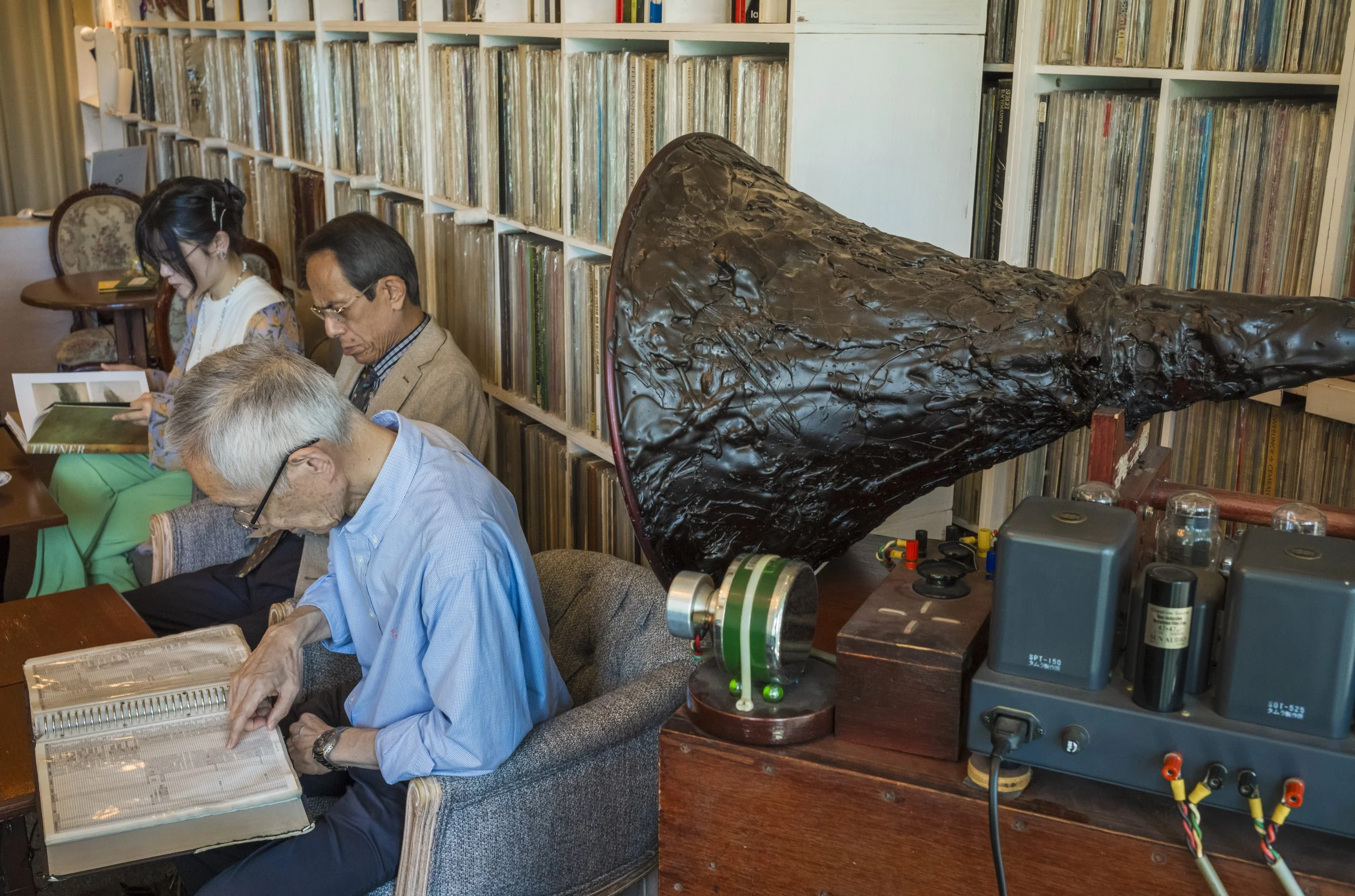
These places devoted to community, to passions as precise as they are infinite in their scope of research, are hard to count in Tokyo and in other parts of Japan. For any genre of music - ambient, tango, mambo, bossa nova, funk, electro, soul, reggae - you can find dedicated enthusiasts ready to open their own small venues (sometimes in their own apartment) to share their music, their record collection and their knowledge... At a jazz kissa, you don't listen to a single song, but to an entire “side”. There are no DJs, the decor is not there to look vintage, there are no poses or meaningless aesthetics. Instead of speed, connoisseurs prefer the slowness of sonic contemplation. It's the exact opposite of streaming music platforms, where nothing is curated, nor considered over time, in depth. Taking this line of thinking one step further, we could even say that kissa are small places of peace and contemplation that have seen the student revolt of 1968 die in their midst but have kept the flame alive. In these bubbles of the underground, we confront the shattered and wonderful world of subcultures.
The owners of jazz kissa are unique free spirits who most often oppose the established order. In this vein, Nick Dwyer visits a mythical jazz kissa, Basie. Near Ichinoseki Station in northern Japan, a four-hour drive from Tokyo. This kissa is run by Moriyama Kichiryu, a jazz specialist who opens whenever he feels like it, with no set hours. Count Basie himself came here several times to listen to jazz on Moriyama Kichiryu's extraordinary sound system, which Nick Dwyer describes: “He's just got big JBL speakers perfected over 5 decades. I just never heard sound like that before. I experienced this kind of oral hallucination. It was like the shift from watching black and white films to Technicolor, a sonic version of that. So incredible. I was in the music. It was all around me. I remember the record The Birdland All-Stars Live At Carnegie Hall. I had my eyes closed, and I felt like I was there like literally. I had that feeling like, Oh my God, how lucky am I that I get to hear Charlie Parker today. It was like a psychedelic experience. It was transcendent. Another thing that I need to point out that makes these places magic is this shared experience. When I was in Basie I was deep into that record. I was like in swimming in the record, I was in Carnegie Hall. I don't know what my face looked like. But then you kind of have this moment where you break out of it, and then you look across the room. And then there's just this Japanese guy, a construction worker, and he's just deep in it. And you kind of like look at each other, and you have this knowing look, this shared experience.”
Another place, another experience, Nick Dwyer also conjures up the mad sound of Jazz Spot Candy in Chiba-Ken, a tiny jazz kissa where Mrs. Hayashi has built a sound system based on very modern JBL Everest DD 6800s speakers, with a special diffusion set: “I remember going to her place hearing a Coltrane record or hearing Eric Dolphy or Pharaoh Sanders and all the breaths. I'd never heard breaths before. And just all of a sudden, there's an emotional quality in the music that was never present. It's not present on earbuds, it's just this whole other frequency reign. You're feeling the emotion, the intensity of the artists when they're playing and those breaths and you start to get a sense of what's going on in the room, if they're tense… It just opens up this whole new emotional range on the spectrum that didn't exist before.”
This unparalleled ecstasy of listening to music has also been documented first-hand by Japanese author Haruki Murakami, who writes in his Conversations with the great Japanese conductor Seiji Ozawa: “As Duke Ellington once said, ‘There are simply two kinds of music, good music and the other kind.’ In that sense, jazz and classical music are fundamentally the same. The pure joy one experiences listening to “good” music transcends questions of genre.” In 1974, in his twenties, Murakami opened his own jazz kissa in a basement in Kokubunji, named Peter Cat after his pet companion. He put on small jazz bands at weekends, and when no one was playing during the week, he delved into his own immense record collection. This job, which didn’t pay much, meant he could live independently while satisfying his main obsession: listening to jazz.
In 1977, he moved to Sendagaya and opened another club with room for a piano and a small quintet. This was a rarity since live jazz clubs had all but disappeared by the 1950s. He closed Peter Cat in 1981, as soon as he could make a living from his writing. His music - he reputedly had a collection of over 10,000 vinyl records - and jazz in particular, as well as the atmosphere in his bars, have greatly influenced his writing style, his characters and his stories, which are full of references to albums and songs. His book Norwegian Woods, for example, takes its name from a Beatles song. In Kafka on the Shore, he describes this particular epiphany, which echoes exactly that experienced by Nick Dwyer in Basie: “Do you think music has the power to change people? Like you listen to a piece and go through some major change inside?” Oshima nodded. “Sure, that can happen. We have an experience – like a chemical reaction – that transforms something inside us. When we examine ourselves later on, we discover that all the standards we’ve lived by have shot up another notch and the world’s opened up in unexpected ways. Yes, I’ve had that experience. Not often, but it has happened. It’s like falling in love.”
It's only a short step from love to devotion. Each jazz kissa offers its own special ceremony dedicated to music. Whether at the Meikyoku Kissa Lion or the Bird Song Café, small shrines are set aside for the record being played, in the shape of a papier-mâché castle at the Lion Café or a bird painted on the wall at the Bird Song Café. The sound systems occupy sections of the walls in the same way that cathedral organs once dominated cavernous naves, drawing all ears and eyes to the sound. But the gods worshipped here are Miles Davis, John Coltrane, Bill Evans or Chopin, and for a few hours, they are resurrected in all their splendor - breaths included - before a congregation of contemplative disciples. Small places of worship that weld together communities of believers who carry within them a faith in the beauty of music. As Nick Dwyer says, whatever you're looking for, you'll always find your chapel somewhere in Tokyo, “a little temple that has been devoted to one genre.”
